
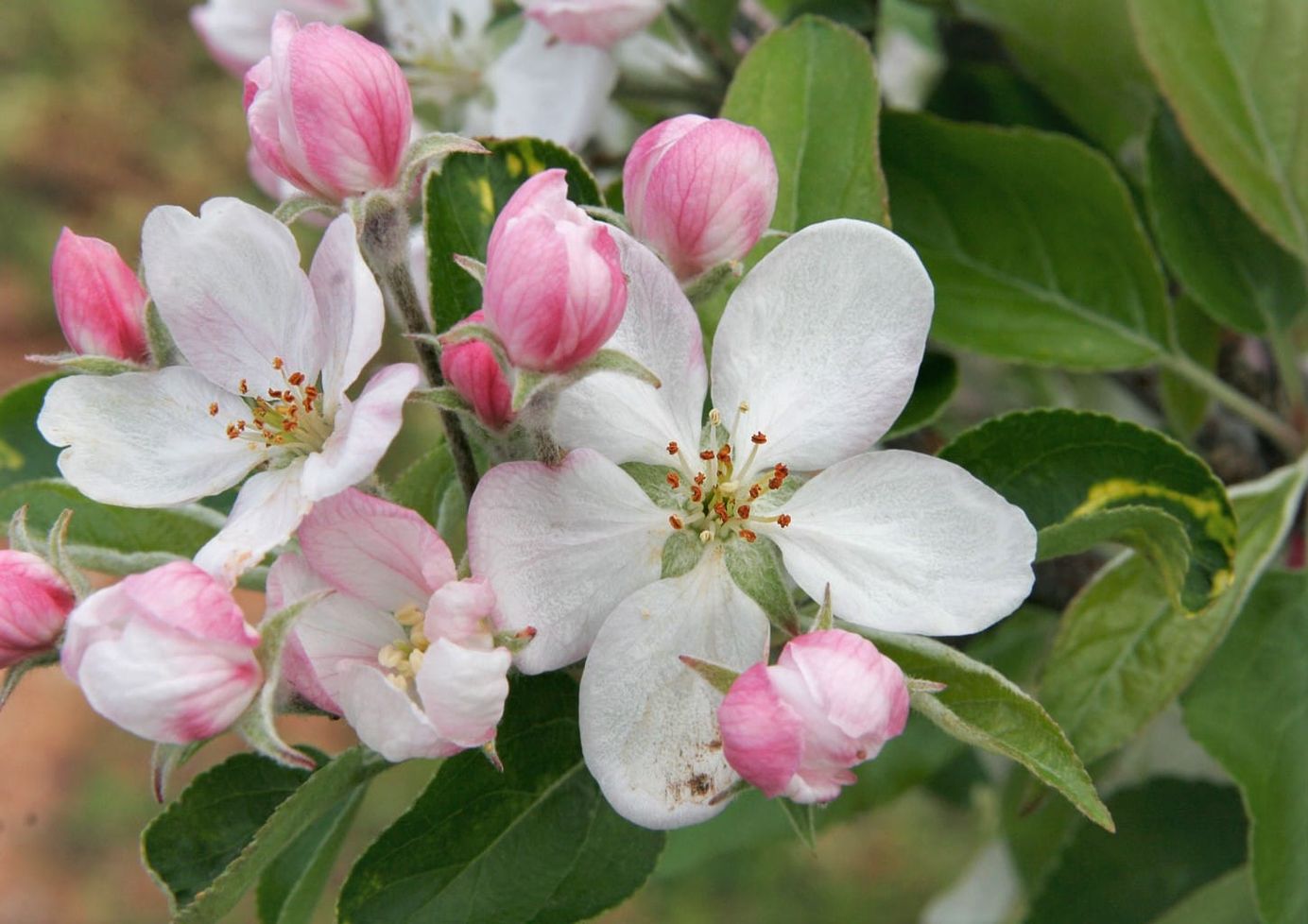
Apples - Part II
The apple industry worldwide has been undergoing change, particularly with the use of dwarf rootstock that keeps trees smaller and increases fruit production.
June 20, 2026
Patricia Hanbidge, Lead Horticulturist, Orchid Horticulture
Key points from this story:
- Dwarf rootstock keeps apple trees smaller
- Dwarf apples bear fruit in 2-3 years
- Semi-dwarf apples bear in 4-5 years
- Standard apples take 7-10 years
- Grafting method impacts success rate
- Grafted trees can have multiple apple varieties
Last week, we introduced growing apples on the prairies and shared the fact that we can grow apples as good as those grown anywhere in the world. The culture of apples was covered so we know the basics about growing our own apple trees.
Another interesting fact is that the apple industry worldwide has been undergoing change. As stated earlier each apple tree is produced asexually so a graft from the desired type of apple is grafted onto a compatible rootstock. This rootstock began as a complete tree with a root system and a single stem. In the apple industry most often this rootstock is a dwarf rootstock which will have an effect on the apple tree itself to keep it smaller in stature and will also have an effect on when fruit is produced. The apple industry has been utilizing dwarf rootstock for many years as the trees themselves are smaller, require less maintenance, pruning is easier as they are shorter trees and the production has proven to result in larger fruit and in fact more fruit can be produced on the same size of land base.
As mentioned above, the rootstock will affect the age when the tree begins to bear fruit. Generally speaking, dwarf apples will produce two to three years after planting while semi-dwarf apples will usually begin to bear fruit at four to five years after planting. Standard apples may take seven to ten years to reach maturity and begin to bear fruit. Please note that dwarf trees will need staking or a trellis to support themselves and stay upright when fruiting.
The top part of the tree is referred to as scion wood. This scion wood is collected during the winter while the tree is dormant and should be one quarter to three eighth of an inch in diameter. Store the scion wood in a cool, moist location with temperatures close to 34 F. Do not freeze but keep the humidity high and very close to freezing.
Grafting during late summer should occur when there is sufficient movement within the tree that the bark slips or in other words when the bark of the stock easily separates from the wood and buds are fully developed. Budding and specifically T-budding is the chosen grafting method where a single bud is taken from the scion wood onto the root stock. This method is faster than other grafting techniques and the success rate is generally quite high as a stronger union is formed between the scion wood and the root stock. Even for a novice grafter, this method has proven to be one of the best options. The bud will remain dormant until spring and once the graft site has healed the wood above the graft will be removed.
Please note that in order to do this grafting a sharp, good quality knife is essential. The graft should be wrapped with grafting tape which is a specialized tape used for grafting. Over the years many other tapes and methods have been used. When I first learned to graft, we wrapped the graft site with rubber bands and paraffin. It took a fine hand to ensure the wrapping was tight but not too tight to keep the graft site from desiccating but not so tight that the graft site would be strangled and not allow the sap to flow.
It is not difficult to find a grafted apple tree with multiple varieties of apples grafted together. This is amazing for those of us who have small areas to grow our favourite plants and also for those who wish to have less trees to care for.
Watch next week for some of my favourite apples that you can successfully grow.
Last Mountain Times Newsletter
Join the newsletter to receive the latest updates in your inbox.