
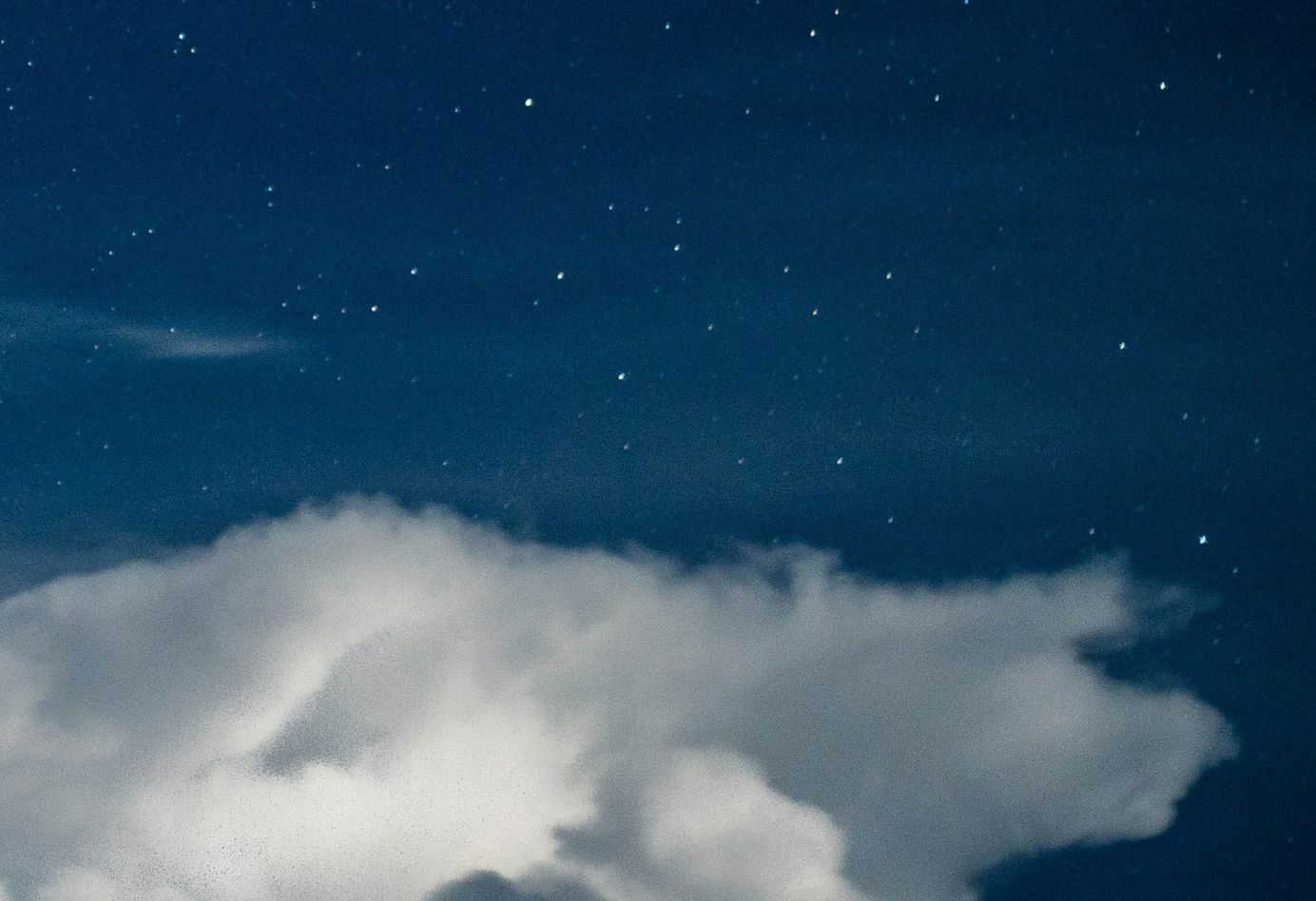
August skies
The Moon is just past full as the month opens, reaching last quarter on the 5th. This month features significant celestial events including a total solar eclipse on the 12th and the peak of the Perseid meteor shower on the 12th.
July 21, 2026
Key points from this story:
- Moon phases throughout August
- Total solar eclipse on August 12
- Perseid meteor shower peaks on August 12
- Mercury close to Jupiter on the 15th
- Venus visible during twilight
- Mars conjunction with M35 on the 16th
The Moon is just past full as the month opens, reaching last quarter on the 5th. Two days later, the Moon is among the Pleiades (the Seven Sisters) with Uranus, then, on the 9th, Mars is 4 degrees south. Perigee is when the Moon is at its closest orbital point to Earth—this occurs on August 10, when our satellite is 363,284 km away. The following day, Mercury is 2 degrees south of a very slender Moon. New Moon is on the 12th, which is a total solar eclipse over the North Atlantic Ocean and Spain. The lack of an interfering Moon on the night of the Perseid meteor shower will be welcomed by viewers. On the 16th, Venus is 2 degrees north of the waxing crescent Moon. The 21st sees Antares only 0.6 degrees north of the just-passed first-quarter Moon. Apogee is when the Moon is at its orbital farthest from Earth—on the 22nd, at 404,642 km. The Moon is full near midnight of the 27th, which generates a partial lunar eclipse. This might be a good reason to stay up for late-night photo op, as most of the Moon's disk will be in shadow.
Mercury makes for a great viewing opportunity for the Northern Hemisphere. In the morning sky, close to nearby Jupiter, the speedy planet is joined by the Moon on the 11th. By the 15th, Jupiter is less than half a degree away from Mercury. If you've never seen Mercury before, this is a great opportunity, using Jupiter as your guide.
Venus remains bright as the Evening Star, but hugs the horizon. It can be seen in twilight, as the Sun begins to set. The Moon slides by on the 15th.
Mars is quite visible in the eastern dawn sky, among the stars of Taurus, The Bull. As the month progresses, the Moon enters the scene on the 9th and Mars moves eastward into Gemini, The Twins. The cluster M35 is in conjunction with Mars on the 16th.
Jupiter is too close to the Sun for the first part of the month, but becomes increasingly visible in the east before morning twilight. Mercury is very close on the 15th, just west of the Beehive Cluster in Cancer, The Crab.
Saturn, in Pisces, The Fish, rises in the east shortly before midnight. Neptune hovers close by all month, and the Moon joins them on August 3 and again on the 31st.
Uranus rises close to midnight among the stars of Taurus. The Moon slides by on the 7th.
Neptune, in Pisces, is leading Saturn across the night sky, only 10 degrees apart, and the waning Moon makes for a trio on the 3rd.
The Perseid meteors peak the night of August 12. That's when Earth passes through the cloud of tiny particles left behind by Comet 109P/Swift-Tuttle in its many passes by the Sun. It has been confirmed that the earliest sighting was over 2100 years ago, returning approximately every 130 years. The comet is next due to appear in 2126.
Last Mountain Times Newsletter
Join the newsletter to receive the latest updates in your inbox.