Forsythia – an early blast of colour for the garden
Forsythia offers bright yellow spring blooms before leaves appear
- By Patricia Hanbidge
March 19, 2026
key points from this story:
- Forsythia blooms early with yellow flowers
- Shrub is hardy but flowers less so
- Blooms may only form near snow cover
- Cold kills cells when ice forms inside
- Forsythia uses supercooling to prevent freezing
- Northern Gold is the hardiest cultivar
After every winter, we are happy to see colour in the garden. From the landscape perspective, we would like to see our gardens filled with colour throughout the season and beyond. So how can we get early spring colour with some height? The answer of course is spring flowering shrubs.
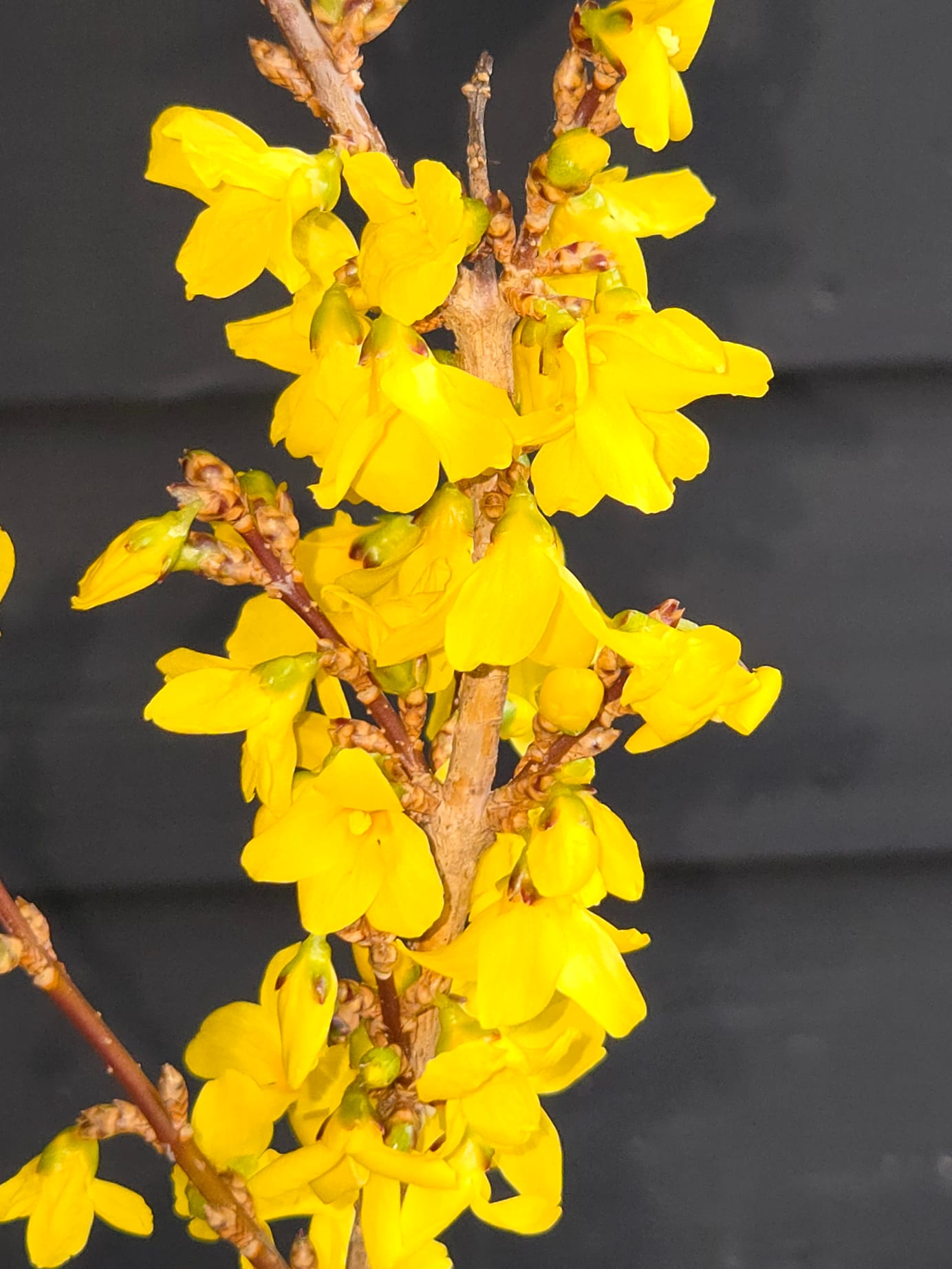
One of the best shrubs to plant for spring colour is the forsythia (Forsythia ovata). Spring is made so much better by this shrub that provides happy yellow blooms very early in spring – in fact before the shrub leafs out. On the prairies, if you see a shrub literally covered with bell-like bright yellow flowers it is sure to be the forsythia.
It is an easy shrub to grow as the shrub itself is very hardy. However, the early blooming flowers are not as hardy as the rest of the plant. The blossoms are only hardy to –38°C. It seems that most winters that temperature would be much colder than what is experienced but remember that not only the ambient temperature outside is important but that temperature along with the wind chill factor. Most years these lovely shrubs will be covered in blooms but sometimes you only see a flush of blooms along the bottom. This is because these blooms would have been more protected from cold winter temperatures than those flower buds higher up on the shrub due to the insulative properties of the snow cover.
So what exactly is it that kills a plant in winter? It is most often the fact that ice forms inside the cells of the plant. The cellular result is similar to putting a beverage in the freezer and forgetting to take it out before it freezes solid. It is usually a bit of a mess as the beverage container is unable to withstand the expanding force of ice forming within. The same thing happens within a plant cell. The hardiest plants will actually dehydrate their cells to the point where ice formation inside of them is simply impossible. For other plants that are less hardy like the forsythia they have adopted a different strategy of winter survival called supercooling. This involves cooling the water to below the freezing point without the formation of ice.
This seems rather scientific but really it is quite simple. Water in the liquid form is made up of closely packed water molecules arranged in a haphazard manner. They are touching but are not in any particular order. When the water becomes frozen those randomly arranged molecules become more aligned and actually locked together in a more precise pattern. The ice crystal is more like a brick wall rather than a haphazard collection of individual bricks you would find in water in the liquid state.
When ice is formed, there is a tiny impurity in the water that begins the process of two molecules locking together or the crystallization process. This impurity is termed the “ice nucleator”. What quickly follows is the continuing growth of the crystal which is what actually does the cell damage within the plant.
Plants that have the ability to supercool maintain the water in the cells in an ultra-pure state where no nucleators are present. When there are no tiny impurities present, the crystallization process does not begin and therefore the water can remain in the liquid from at temperatures lower than freezing. Absolutely pure water can remain liquid to a temperature of –38.1°C. Therefore, if during the winter the temperature within a forsythia bud does not drop below that supercooled temperature, the plants will flower in spring. Plants are so amazing!!
If you would like to grow your own forsythia try the cultivar `Northern Gold' as it is the hardiest species on the market. Happy almost spring!
Last Mountain Times Newsletter
Join the newsletter to receive the latest updates in your inbox.