
Growing food in containers
Sometimes we think we do not have enough room to grow at least some of our food. However, container gardening is a great art and can even make gardening easier. Anywhere in the landscape containers can have a place.
April 27, 2026
Patricia Hanbidge, Lead Horticulturist, Orchid Horticulture
Key points from this story:
- Grow food in limited spaces
- Use suitable container sizes
- Plant what you'll eat
- Mix veggies for beauty
- Maintain container garden carefully
- Explore unique plant varieties
However, container gardening is a great art and can even make gardening easier. Anywhere in the landscape containers can have a place. As life evolves we often have less space to garden in and time always seems to be in short supply. Containers can make life just a little bit easier.... the catch is to learn how to garden in containers wisely.
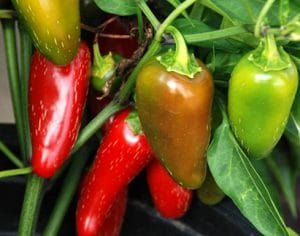
It is not difficult to grow food in containers and there are actually a ton of different plants that can be grown. Use your imagination and make your containers attractive as well as the added benefit of feeding you and yours. I plant everything in containers but remember to only plant what will fit the container until after harvest. For example, if you wish to plant tomatoes in a container you need to use a 15 to 20-gallon container so your tomato will flourish and not dry out! Smaller plants like peppers or eggplant can use a container a little bit smaller or alternatively put 2 or 3 plants in the larger container. When you are planting it seems crazy for one little plant to take up all that space, but restrain yourself from planting more than one tomato as you will definitely regret it later in the season. To help stop yourself, plant short season crops like lettuce, green onions and radishes so you are not tempted to overfill the pot with tomatoes.
If you are thinking of vegetables that are harvested for their root, then it is important to plant the appropriate size for the container. My large pots will take full size parsnips or carrots but if you have smaller/shorter containers then there are a variety of mini vegetables you can grow. 'Thorogreen' beans, 'Baby Head' cabbage, 'Early Sugar Midgit' cantaloupe, 'Bunny Bite' carrots, 'Little Minnie' cucumbers, 'Easter Egg' eggplant, 'Ladyfinger' potatoes are just a few of the tiny veggies available. Planting a container of spring onions is also a great idea. Nothing beats home grown veggies!
Some other things to consider that are both beautiful and edible include kale; nasturtium, calendula and bright lights Swiss chard. Even better is the more you pick, the better they grow which is also true of your herbs. Even growing lettuce and greens that have different leaf shapes and colours are fair game. Mix some of these in with longer season kale and have a container that will be beautiful from spring to fall.
One of the most important things you need to remember is to grow what you will eat. However, do not be afraid to experiment as there are endless plants out there just waiting for you to give them a new home. Go for a tour of your top three garden centres and shop for the unique and beautiful - but still edible!
Remember that you will have to feed your container garden in order to get any harvest. I use a soilless media in my containers and I like to use a slow release fertilizer when planting just in case I get busy and forget to feed my veggies. Each watering I also use a dilute mixture of 20-20-20 for those edibles which we do not wish to bloom and a dilute mixture of a high phosphorus complete fertilizer for those edibles we need to see bloom and fruit.
Good luck with growing food in your containers this growing season!
Last Mountain Times Newsletter
Join the newsletter to receive the latest updates in your inbox.