
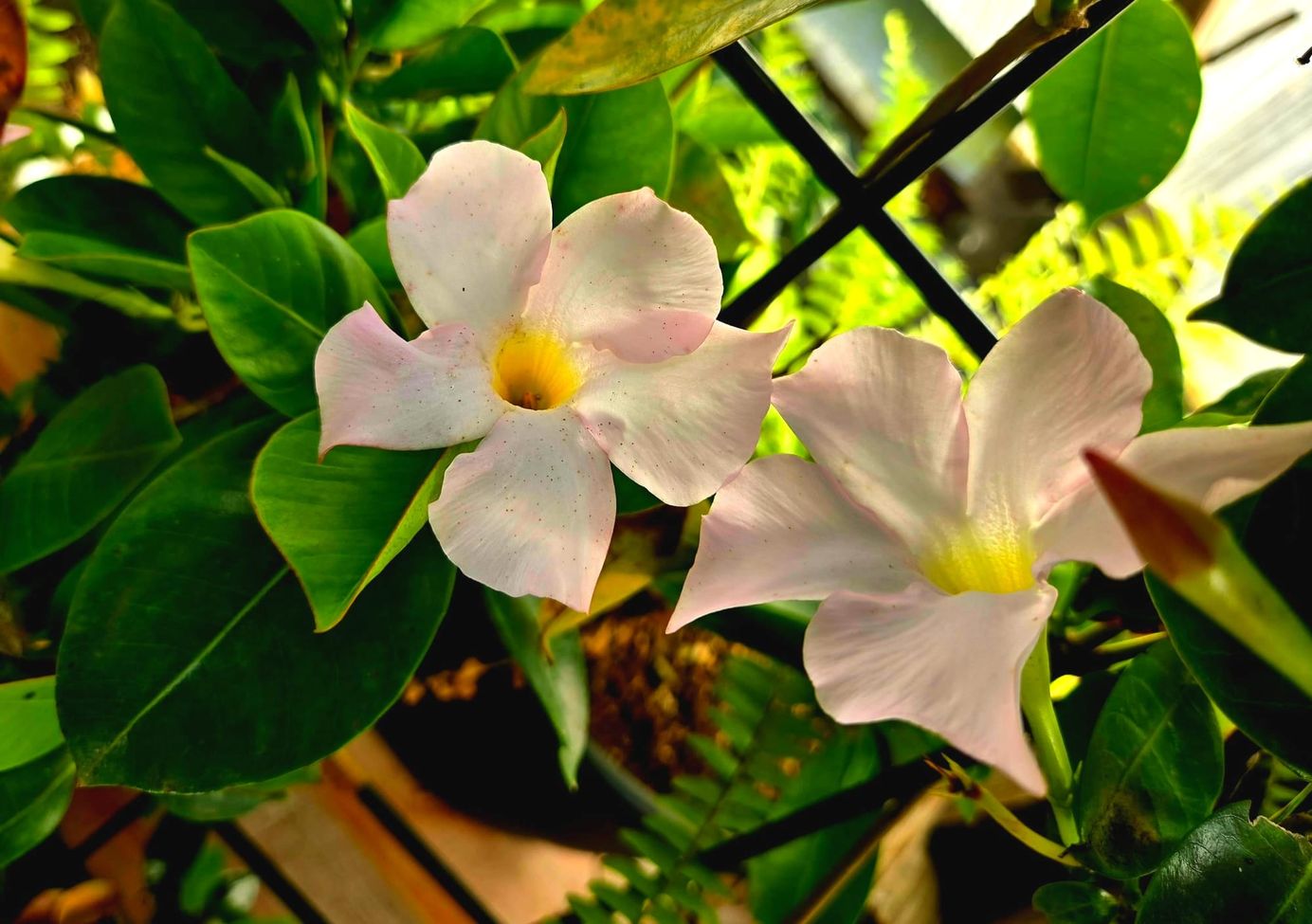
Growing mandevilla
Mandevillas are tropical or subtropical vines known for their colorful flowers and glossy leaves. They require specific care to thrive, especially when transitioning indoors for winter.
November 19, 2026
Patricia Hanbidge, Lead Horticulturist, Orchid Horticulture
Key points from this story:
- Mandevillas are tropical vines
- Flowers come in various colors
- Hardy to zone 9 and above
- Best grown in full sun
- Transition indoors before winter
- Watch for pests when indoors
Mandevillas are a genus (and the common name) of a vine that is tropical or subtropical in origin. It was first described as a genus in 1840 and is commonly called rocktrumpet. The genus was named after Henry Mandeville who was a British diplomat and gardener. They are native to the southwest United States, Mexico, South America, the West Indies and South America.
The flowers that make this spectacular vine so famous come in many colours including white, cream, purple red, pink and yellow. There have also been many new hybrids developed as both the flowers and the big shiny leaves are enjoyed by many. It is considered hardy to zone 9 and above so if you live in a more severe climate, the mandevilla is an annual or will need to be brought inside. They will not tolerate temperatures below 10 C.
They are best grown in full sun when planted outside and if you wish to keep your mandevilla over the winter, it is best to have it in a container to allow for easy transition from outside to inside. Outside, it will grow rapidly so will need to be watered frequently so it will not dry out. During a short growing season, it will easily put on three to four metres of growth so ensure you have a plan of supporting the vine. Fertilize it regularly to ensure there is enough food for the plant to grow well. Some people prefer to use a very dilute fertilizer solution each time they water, while others prefer to fertilize each week. When I plant anything in a container I always put some slow release fertilizer in the planting mix to take the pressure off of frequent fertilization chores.
If you plan on bringing your mandevilla inside, then gradually reduce the intensity of the sunlight a few weeks prior to moving it inside as even if you take it inside and place it directly under grow lights the light is much less inside. We have no chance of emulating the sun! It will likely also be necessary to cut back the plant to allow it to fit more easily inside. Place it in a large, sunny window or under a plant light. The more light you are able to provide, the better your mandevilla will do. Water a couple times a month as the growth will be limited, just ensuring it does not dry out completely as that will result in leaf loss. It is not necessary to fertilize inside unless it is actively growing.
A word of caution! Anytime you bring plants in from outside at some point you will see a hatch of critters - they may be aphids, scale, mealybugs or even white flies. Do not panic! When I bring plants in I go through a bit of a routine. A few weeks prior to bringing them in I wash the whole plant off a few times just with water. I then do an insect treatment (with Neem or insecticidal soap) ensuring that manufacturers guidelines are followed. I then rinse them again, let them dry and begin the moving of the plants themselves to their winter home. Usually, about January or maybe February, I will see some evidence of new critters. It may be frass or the insects themselves but it is key to ensuring you are observant prior to the world exploding as when that happens, there is not much choice in giving them the "F" treatment - which by the way is freezing. They again become outdoor plants for a very short period of time and your insect infestation is history.
Before we know it - spring will be here once again!
Last Mountain Times Newsletter
Join the newsletter to receive the latest updates in your inbox.


