
Planning for spring
As summer moves closer to fall, the focus changes from the endless days of summer into action that is forward thinking. I find myself planning for the next great event that comes to the garden - which is the first colour in the spring.
August 09, 2026
Patricia Hanbidge, Lead Horticulturist, Orchid Horticulture
Key points from this story:
- Plan for spring flowering bulbs
- Best time to plant is September
- Choose larger bulbs for better results
- Ensure soil is well-drained
- Group bulbs for a larger impact
- Use fertilizer to encourage growth
As summer moves closer to fall, the focus changes from the endless days of summer into action that is forward thinking. I find myself planning for the next great event that comes to the garden - which is the first colour in the spring. Not that harvest falters, nor the endless watering, the weed pulling and the other daily chores, but there is momentum building for what autumn brings. The kids are both excited about school and dreading the early morning rising. In the garden, we again begin to think about when we will get the "killing frost". As the evenings and overnight temperatures become cooler, we begin to enjoy the crisp air, the lack of bugs and the evolving new colours of the foliage.
There is a small part of me that starts to become a bit melancholy about the impending winter, but that is easily pushed aside by the planning that goes into preparing for a spectacular spring! Spring flowering bulbs must be planted in the fall to allow the bulb to develop a good root system prior to winter. These bulbs also need a stratification or cold period (winter) in order to allow their flowers to fully develop. For best results plant them well before our ground freezes. September is the best time to plant spring flowering bulbs on the prairies.
Bulbs are available in all the garden centres and all of the big box stores. There is also a huge selection that is available from mail order bulb houses. When purchasing bulbs, it is important to remember that this is one instance when you truly get what you pay for. The larger bulbs of each flower type will without fail give you a better product. Take time to examine the flesh of the bulb as it should be smooth and free of any blemishes. If you are like me and you like to touch and see what you are purchasing, your favourite garden centre should have plenty of stock that will ensure you can enjoy the latest bulbs of your dreams come spring.
Bulbs should be planted in an area that is well-drained. The soil should be free of weeds and dug to a depth of about 12 inches (30cm). If your soil is a heavy clay soil, incorporate equal portions of coarse sand and a suitable organic matter like compost. Always add the organic matter prior to the sand. It is a good rule of thumb to incorporate a good 4 to 6 inches (10 to 20 cm) of organic matter prior to the soil prior to planting. Apply a standard bulb booster fertilizer (9-9-6) or bone meal at planting time to encourage a vigorous and healthy root system.
The planting depth will vary for each type of bulb, but a good rule of thumb is to plant the bulb to a depth of 3 - 4 times the width of the bulb. Therefore, if you are planting a tulip bulb that is 2 inches (5 cm) wide, it should be planted 8 inches (20 cm) deep. After planting, water the soil thoroughly and mulch the surface with leaves or grass clippings to a depth of 2 inches (5 cm).
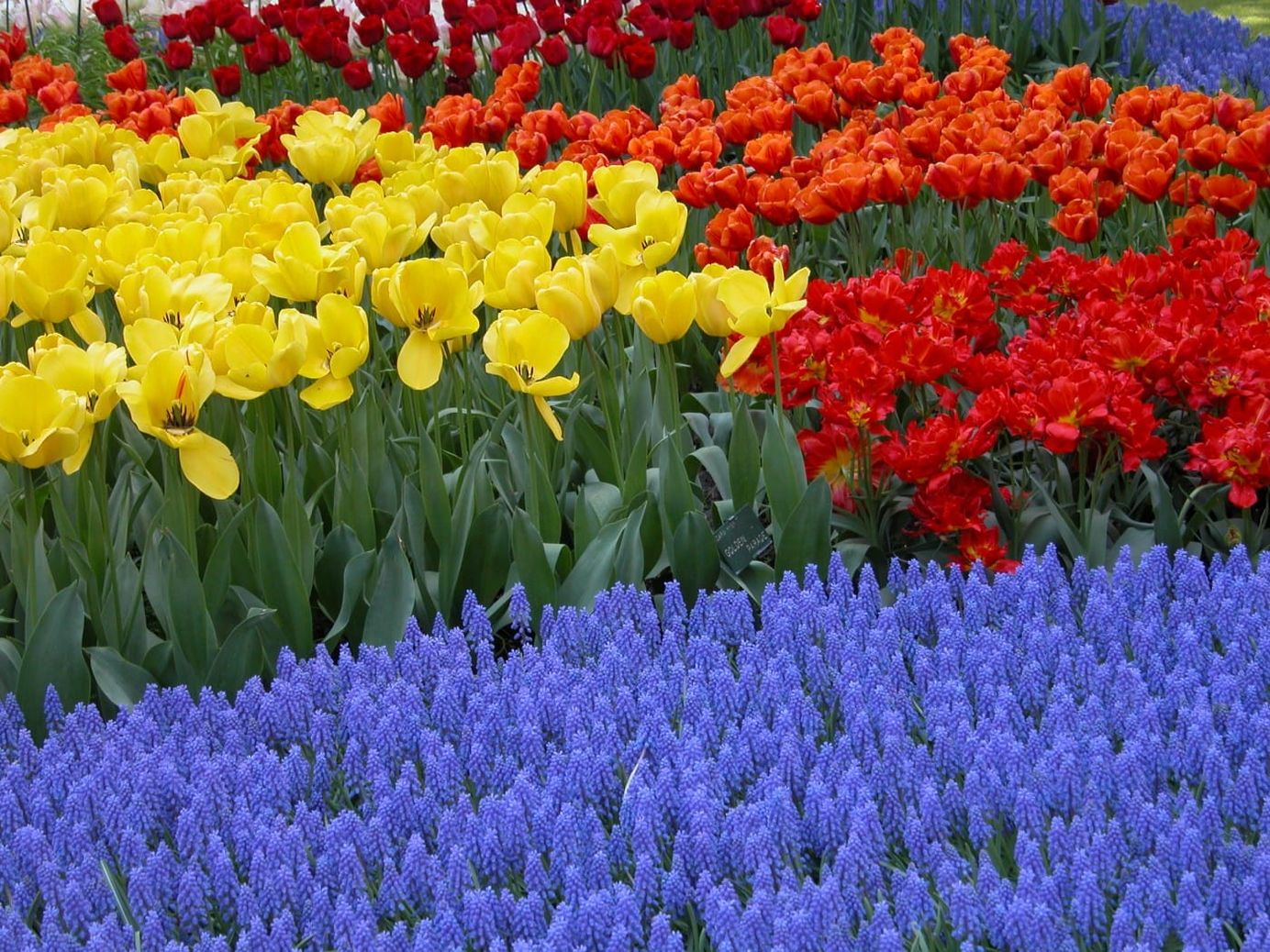
When planting spring bulbs, you will get the best impact if you group the same type of bulb together. The bigger the grouping the larger the impact will be. Most spring flowering bulbs are low in stature. What that means from a design perspective is that they should be planted at the front of the border but also somewhere that enables you to enjoy the show on a regular basis. Spend a bit of your fall in the garden planning for spring, plant some spring flowering bulbs and enjoy the grand show in the spring!
The following bulbs will help you in this process:
- Scilla siberica (Squill) - deep blue or white in colour, 4 - 6 inches (10 - 15 cm) in height
- Crocus chrysanthus (snow crocus) - available in all the traditional colours, 3 - 4 inches (8 - 10 cm) in height
- Tulipa tarda (tarda tulip) - yellow flowers with white tips, 3 - 6 inches (7 - 15 cm)
- Fritillaria pallidiflora (Siberian fritillary) - larger pale greenish-yellow blooms with a bluish leaf, 12 - 16 inches (30 - 40 cm) in height
- Tulipa spp. (hybrid tulips) - huge selection of colours, heights and flowering time. The Darwin or cottage type tulips are the most reliable on the prairies.
- Narcissi spp. (daffodils) - many selections to choose from, like 'King Alfred' - the tall, traditional, yellow trumpet daffodil that truly means spring
Last Mountain Times Newsletter
Join the newsletter to receive the latest updates in your inbox.