
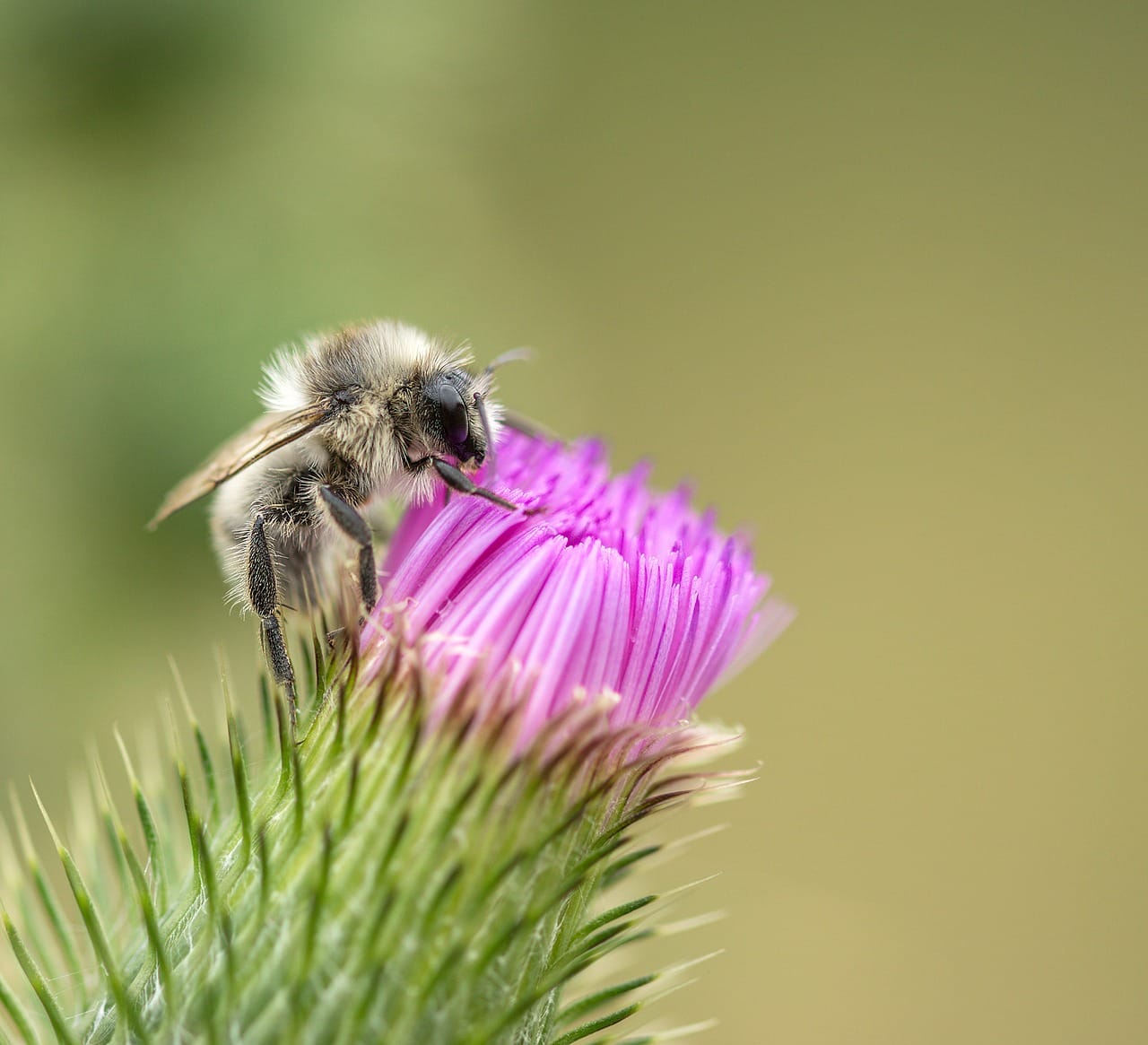
Solitary bees
Solitary bees help pollinate gardens and crops across Saskatchewan while easy-to-build bee houses can support their survival
- By Patricia Hanbidge
March 31, 2026
key points from this story:
- Over 350 species in Saskatchewan
- Do not live in hives
- Nest in wood cavities or ground holes
- Pollinate many plant species
- Threatened by habitat loss and pesticides
- Homemade bee houses support bee health
There are over 350 species of solitary bees in Saskatchewan and they are important pollinators of many plants and crops that rely on these insects for pollination. These bees do not live in hives as honeybees do but instead tend to nest in small cavities of decaying wood. Solitary bees do not produce honey or beeswax and live alone. A single female creates her own tubular nest, segmented into five to ten individual cells, each containing a single egg. Tunnel-nesting species nest in tree cavities while ground-nesting species nest in holes in the ground.
While these interesting insects are foraging for food, they also transport pollen and facilitate pollination. Solitary bee species have adapted to feed on a wide range of plants, from generalist species collecting pollen and nectar from many plant species to more specialist species focusing on a small number of plants and a few entirely dependent on a single plant species. Why we have heard so much about these solitary bees is because they have suffered losses in diversity, abundance and range with the key threats due to agricultural intensification, pesticides, climate change and habitat loss due to the expansion of urban environments. However, an urban ecosystem can be planned to include additional foraging resources within the restricted ranges (150 to 600 metres) from their nest sites. Including plants like bergamot, black-eyed Susan, goldenrod, purple prairie clover, smooth aster and yellow evening primrose will all help as well as ensuring you leave some acceptable “messy bits” to attract these tiny little critters.
Building a bee house will also help to create good habitat for these bees. It is really simple to do this yourself. A wooden box that is open to one or both sides filled with blocks of wood or small logs with holes drilled that are 10 cm deep and in a variety of diameters ranging from 2 to 10 mm is as complex as it gets. Personally, I think that the small logs are the best option to ensure bee health. Also ensure you remove any residual sawdust, face the house in the sun facing east or south with no vegetation in front of the “bee house” and place them at least a metre above the ground.
The care the bee house needs is minimal. If birds are attacking the tunnels, then simply attach a piece of chicken wire across the front of the house to protect the bees. In winter, the house should be placed in a dry, unheated shed or alternatively protect the entrances with a piece of plywood or heavy tarp. The pupae that are overwintering in the house need to be cold but dry for the winter months. If at the end of the summer you still have cells which have remained in a walled-up condition, these cells will be dead and should be removed and destroyed.
These solitary bees might include bumblebees, mason bees and even leaf-cutter bees and they prefer to make individual nest cells for their larvae. However, by building a "bee house" it allows them to colonize in one area. This will benefit the amount of pollination you will get in your garden simply by creating a suitable habitat for solitary bees. These solitary bees are harmless and not aggressive and also often are predators of smaller insects.
Please do not hop on the latest lucrative bandwagon and purchase most of the commercially made bee houses. Many of them are expensive, and sadly inadequate for the bees as they do not provide sufficient protection from wet weather; the hole size is too large, have splinters inside and have no solid back wall making them open-ended wind tunnels and are often made of a material which causes condensation and the growth of moulds.
Last Mountain Times Newsletter
Join the newsletter to receive the latest updates in your inbox.