The life of a pond
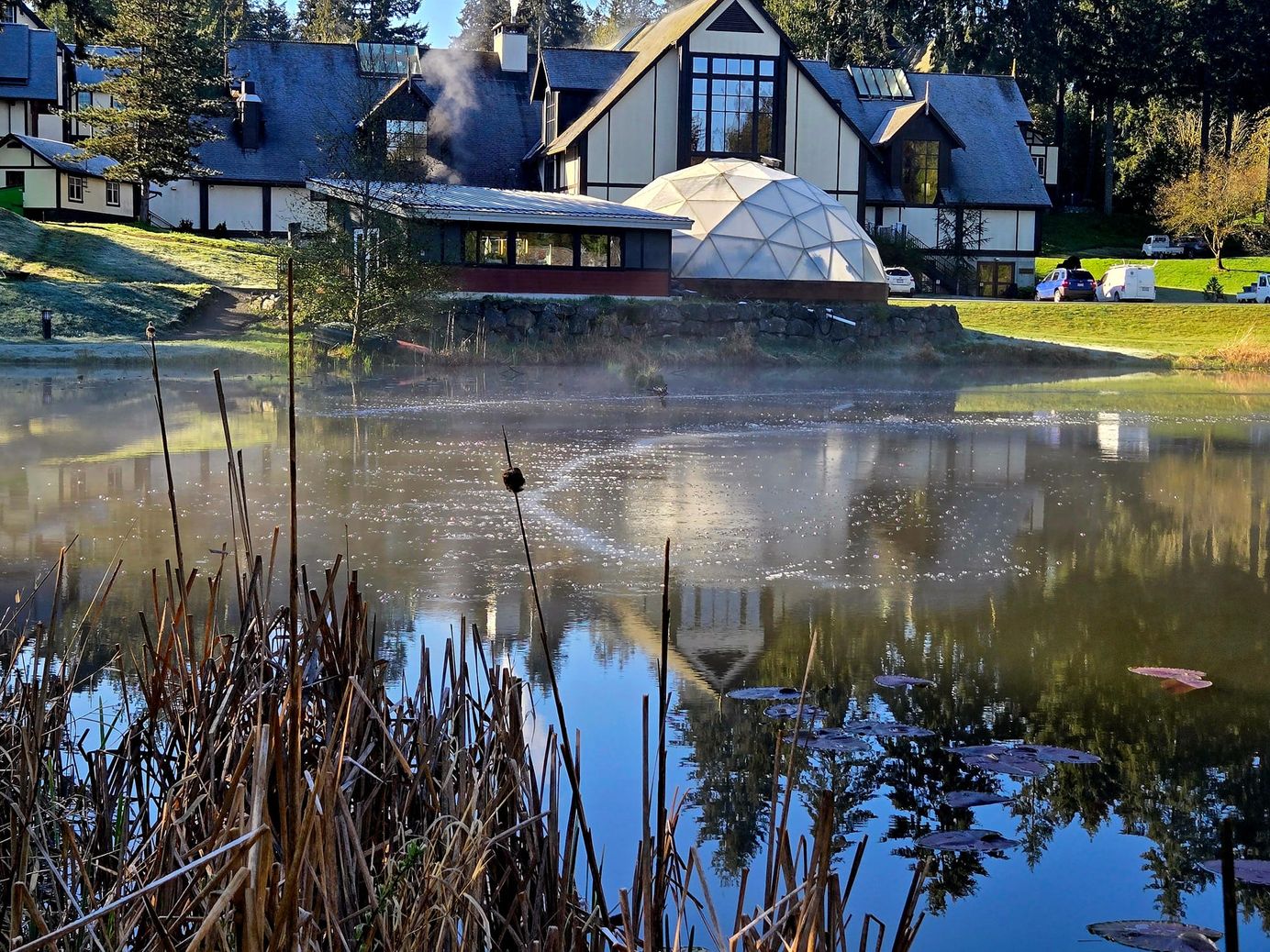
The view from my office on Vancouver Island is unequaled. I look over Lake Omar, a permanent catchment pond that supports complex aquatic life and provides significant environmental benefits.
June 02, 2026
Patricia Hanbidge, Lead Horticulturist, Orchid Horticulture
Key points from this story:
- Lake Omar is a permanent catchment pond
- Supports complex aquatic life and biodiversity
- Permanent ponds filter stormwater runoff
- Provides habitat for various wildlife
- Nutrient-rich water aids Coho salmon growth
- Rainbow Trout released for campus fly-fishing
The view from my office on Vancouver Island is unequaled. When I am working at my desk, I look over Lake Omar, which is a permanent catchment pond. Catchment ponds or retention basins are man-made ponds designed to collect and manage rainwater runoff. A permanent retention pond, acts as a vital artificial ecosystem that provides significant environmental benefits. Water that is sustained throughout the year supports complex aquatic life and this biodiversity creates a thriving habitat oasis. Permanent ponds filter stormwater runoff and act as a natural filter. As the storm water enters, the water flow slows which allows sediment, heavy metals and other pollutants to settle to the bottom of the pond. As the nutrients are taken up by thriving plant life, the water becomes more purified. These permanent ponds help cool the surrounding microclimate, prevent soil erosion along the plant covered banks and significantly improve the natural landscape.
They are typically nutrient rich and are not fed by natural streams. This body of water has ever-changing scenery that is soothing and extremely entertaining. As I am writing this article, there are two pairs of Canada geese vying for this piece of paradise by loudly honking and exhibiting behaviour that will chase the less strong pair of geese to find another place to nest, and claim what they are viewing as the superior spot to raise their young. The superior pair are now resting on the Floating Umbrella and soaking up the morning sun.
As we move into summer, the pond changes as there is less run-off entering. The water levels fall, the temperature of the water rises and the plant and animal living in this body of water flourish. The pond naturally supports cattails, water lilies and a variety of other native flora. Ducks, geese, herons, kingfishers, turtles and crayfish all love this body of water and we even get visits from beavers, muskrat and river otters.
Hidden from our naked eye, this pond is also a source of many invertebrates and other tiny plants and animals that aid our visitors as well as our Coho salmon in growing quickly as fry in the hatchery. We are part of the salmonid enhancement program on Vancouver Island and this past season, I was tasked with modernizing the hatchery. As we were getting ready to pond our tiny salmon this year, Lake Omar water was added to the incubating Heath stacks to gradually introduce what will be the new environment for the Coho which is water from Lake Omar. Just having this nutrient-rich water flowing through their gills, the Coho were absorbing nutrients without even actively feeding. Hence, those Coho that experienced Lake Omar water for a longer period of time, thrived as newly ponded fry with no adjustment period. This spring we also released Rainbow Trout into Lake Omar as they are an integral part of managing this body of water. It also allows interested students the opportunity to fly-fish right here on campus. Needless to say, the Rainbow Trout that many of our students are trying to entice with their fly fishing skills are fat and happy with what they are eating in Lake Omar and not very tempted to work at catching a lure in spite of being expertly made by our students involved in the Fly-Tying 360 club.
The family of mallard ducklings are now nestled together on the stump in front of the hatchery, preening and getting ready to have their mid-morning nap. They were very accommodating to allow me to wander out onto the dock to capture their happiness. Lake Omar has provided for this mother and her seven ducklings ensuring they have a safe place to grow and being supplied with the best food source available for them. We might think that the green stuff floating in Lake Omar is just another algae bloom - but it is instead a protein rich food called watermeal or mealy duckweed. If you look closely at the picture of the ducklings, their crops are full to bursting with a superfood they are feasting on in Lake Omar.
Watch next week for The Life of a Pond - Part II and learn more about the newest superfood!
Last Mountain Times Newsletter
Join the newsletter to receive the latest updates in your inbox.