
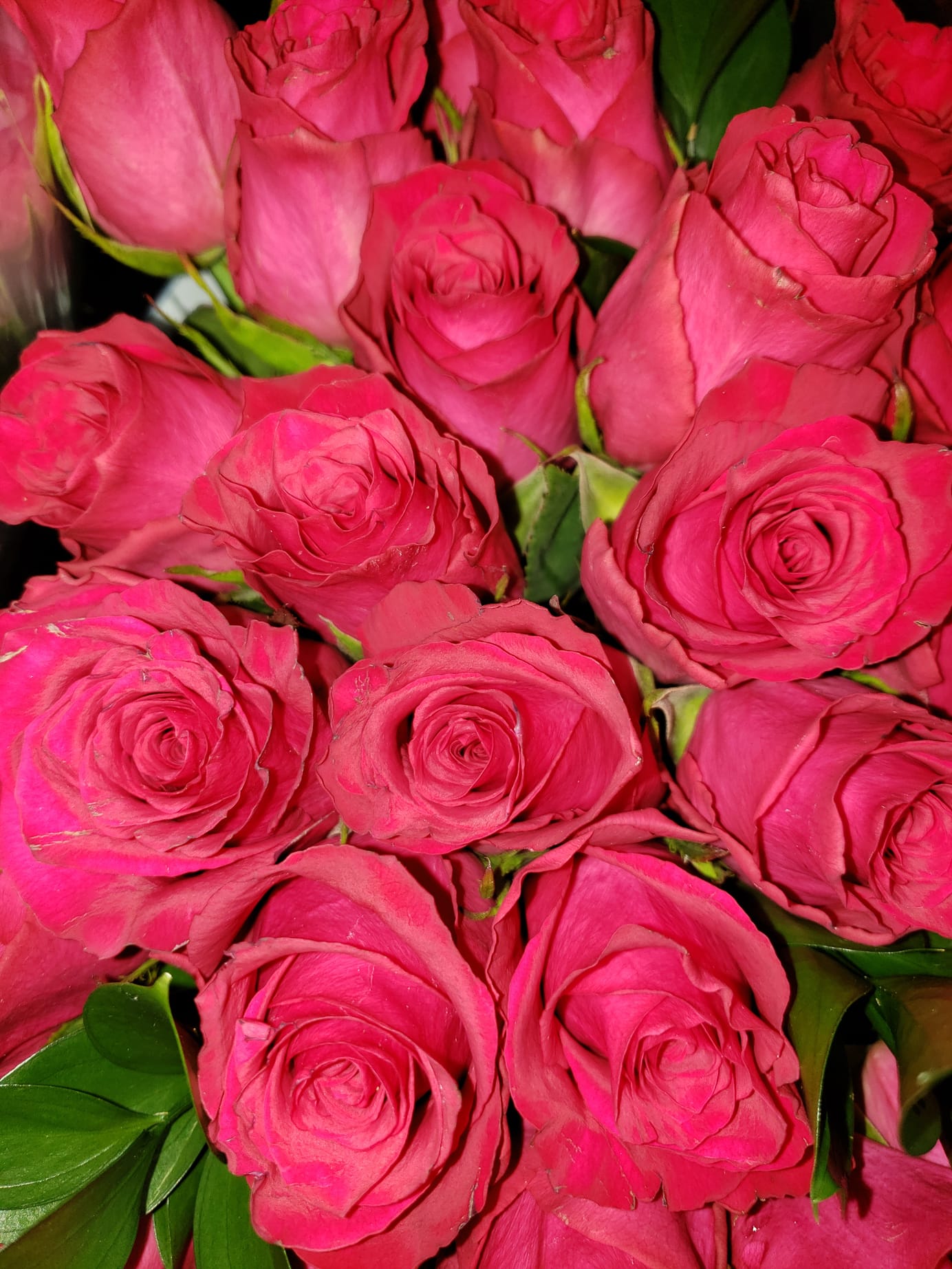
Flowers for Valentine’s Day
Exploring the history and meaning behind Valentine’s Day flower traditions.
- By Patricia Hanbidge
February 03, 2026
key points from this story:
- Valentine’s Day raises flower prices
- Holiday rooted in Roman and Christian origins
- Floriography used to convey emotion
- Victorians created flower dictionaries
- Red roses symbolize love and beauty
- Flower colours carry symbolic meanings
As we get closer to February 14th, floral shops become very busy, and the price of purchasing flowers increases. When I am doing floral classes, I never schedule them for right around Valentine’s Day as the product price is too expensive. I often wonder how trends develop over time, so I thought a bit of history surrounding this special day would be interesting.
Valentine’s Day originated from a mix of Roman, Christian and romantic traditions and evolved to include gifting flowers. I get that gifting flowers is a beautiful gesture as who doesn’t smile when presented with a beautiful arrangement – or even a single stem of something bright and beautiful? For me, my life is enhanced because throughout the year I buy flowers for myself and don’t even need a special occasion. This all began in the 18th century.
If we go back even further, the origins of this special day was linked to the Roman festival of Lupercalia which was a celebration of fertility. This day is named after a 3rd-century Christian martyr – St. Valentine and Pope Gelasius I declared February 14th as St. Valentine’s Day around 496 AD. Geoffrey Chaucer linked the day to romance in the 14th century, associating it with spring and courtship.
King Charles II of Sweden introduced the Persian tradition of Floriography or the language of flowers to Europe. Specific blooms and colours of flowers conveyed secret messages. Victorian people used flowers to express their emotion and had specialized dictionaries to help people to understand the sentimental meanings of bouquets. Floriography was popularized in the 19th century as it allowed people to convey sentiments that were deemed improper to express verbally. How the flowers were arranged and even how the ribbon was tied held specific meaning. Talking bouquets or tussy-mussies were used to communicate complex emotions. Today, floriography continues to influence floral design, wedding planning and the symbolic giving of flowers, adding deeper and more thoughtful meanings to arrangements.
Red roses are closely tied to Greek and Roman mythology as the flower that symbolizes love, passion and beauty. It was believed that the red rose was the favourite flower of Venus/Aphrodite who are the goddesses of love, beauty and fertility. Roses continue to be the top choice for people today to purchase and to express love.
Some common colours of Valentine’s flowers have special meanings. The red rose expresses deep love, passion and romance. Pink flowers convey admiration, joy and gratitude and yellow flowers convey friendship and new beginnings. White flowers, not surprisingly, convey purity and innocence.
Specific flowers also have meanings. The orange blossom conveys innocence and forget-me-nots remembrance. Delphiniums are considered haughty and hydrangeas heartless. Cabbage/kale depicts profit or wealth and sunflowers convey adoration, loyalty and happiness. What an interesting way to build an arrangement!
Last Mountain Times Newsletter
Join the newsletter to receive the latest updates in your inbox.